

Keynote Speakers
Tal Golesworthy
Tal Golesworthy
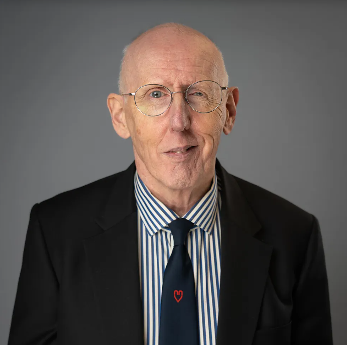
Tal Golesworthy CEng MEI MRSC is a Chartered Engineer and a Member of the Energy Institute and the Royal Society of Chemistry. He has 49 years research and development experience in combustion and air pollution control, 17 years at the National Coal Board’s Coal Research Establishment, including three years training as a patent agent, and 32 years a director of Environmental Development Technology Ltd running R&D projects in combustion and flue gas cleaning/air pollution control. As a Marfan Syndrome patient with aortic dilation, Tal was unimpressed with the options of a Total Root Replacement (TRR or Bentall) or Valve Sparing Root Replacement (VSRR) so set about engineering an alternative. Twenty one years after receiving the first personalised external aortic root support (PEARS) himself, he is now working to extend this surgical option to a wider group of patients with aortic dilation. With NICE IPAC approval, 40+ surgical centres up and running, 1,600+ patients successfully treated, and a collective 5,500+ post operative patient years, PEARS continues to progress.
March 2014 saw the TED talk on the PEARS project ("How I Repaired my Own Heart") break 1,000,000 viewings.In July 2015, Tal received one of the first Patient Innovation Awards in Lisbon. PEARS is now written up in more than 80 peer reviewed journal papers and has been presented at various major international conferences.
Professor Michael Crichton
Professor Michael Crichton
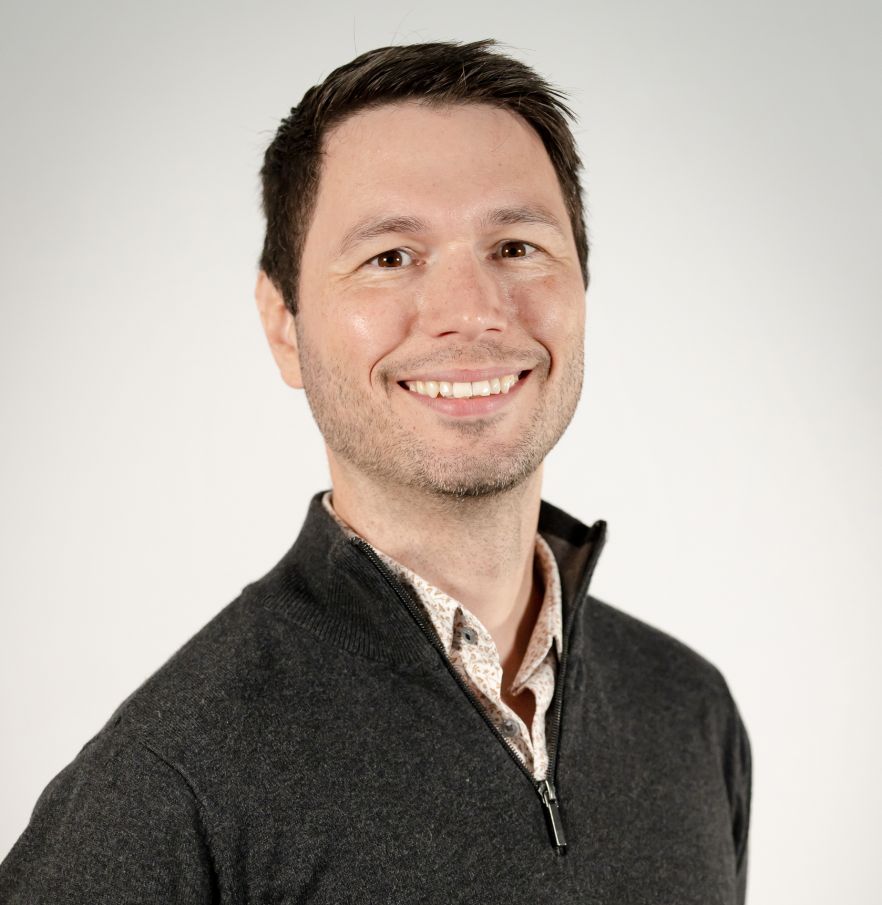
Michael Crichton is Professor of Biomedical Engineering at Heriot-Watt University in Edinburgh where he leads the Soft Tissue and Biomedical Devices Laboratory. His research centres on developing novel sensing technologies, underpinned by an understanding of how soft tissues change mechanically during health and disease. He does this with cross-discipline and cross-sector collaborations taking a problem-first approach.
Michael received his PhD from the University of Queensland, on microneedle vaccine delivery, which led to a number of patents and commercialisation activities. His IP contributed to the spinout Vaxxas, which secured $15m in funding for human trials, and which he joined as a foundational team member. After 2.5 years he returned to academia and in 2017 formed his UK lab.
Since starting his lab, Michael has been driven to create impact from his research to benefit our wider population. He is now leading the formation of TissueMetrics Ltd, a company commercialising his lab’s acoustic sensing technology, which has the potential to provide relief for the millions who suffer from inflammatory skin conditions and who are unable to get an effective and timely support from clinical sources.
A growing theme in Michael’s research is inclusive biomechanics-based technologies where he is working with others to grow discussions on how we move away from one-size-fits-all medical devices. He is proud to sit on the BioMedEng Associations EDI committee. Michael’s is an Academy of Medical Sciences Future Leader in Innovation, Enterprise and Research, and sits on the Science Advisory and Grants Committees of Bowel Research UK charity.
Professor Karl Bates
Professor Karl Bates
Karl Bates is a Professor of Evolutionary Biomechanics at the University of Liverpool. His research concentrates on the functional anatomy of terrestrial vertebrates, with particular focus on the locomotor system. His goal is to understand the basic mechanistic links between morphology (both hard and soft tissues) and limb biomechanics to better characterise how animals achieve their full range of behavioural activities and interact with their environments. He is particularly interested in the functional consequences of changing morphology through deep time and evaluating how elements of the locomotor system have evolved to allow animals to radiate into a variety of ecological niches. This has led him to study a range of living tetrapods from primates (particularly humans and other Great Apes) to archosaurs (birds and crocodilians), as well as extinct groups like dinosaurs and human ancestors, in order to understanding of major evolutionary transitions in locomotor biomechanics.
Professor Liangxiu Han
Professor Liangxiu Han
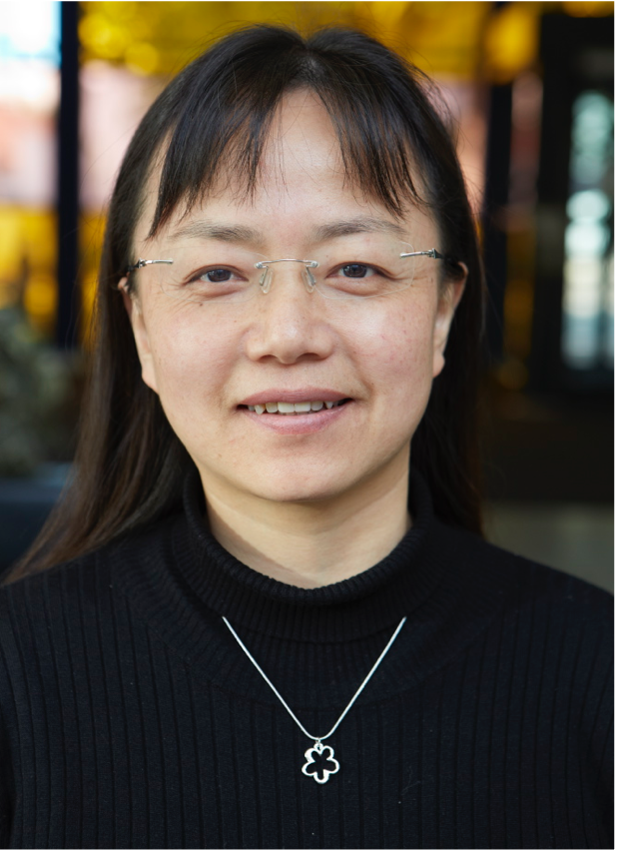
Prof. Han is currently a full Professor of Computer Science at the Department of Computing and Mathematics, Faculty of Science and Engineering, Manchester Metropolitan University. Prof. Han is Academic Director for Centre for Digital Data Research, Faculty Lead for AI, Digital and Cyber Physical Systems and Deputy Director of ManMet Crime and Well-Being Big Data Centre. Prof. Han’s research areas mainly lie in the development of novel big data analytics/Machine Learning/AI, and development of novel intelligent architectures that facilitates big data analytics (e.g., parallel and distributed computing, Cloud/Service-oriented computing/data intensive computing) as well as applications in different domains (e.g. Precision Agriculture, Health, Smart Cities, Cyber Security, Energy, etc.)
As a Principal Investigator (PI) or Co-PI, Prof. Han has a proven track record of successfully leading multi-million-pound projects on both national and international scales (supported by diverse funding sources: UKRI, NIHR, GCRF/Newton, EU, Industry, and Charity) and has extensive research and practical experiences in developing intelligent data driven AI solutions for various application domains (e.g. Health, Food, Smart Cities, Energy, Cyber Security) using various large datasets (e.g. images, numerical values, sensors, geo-spatial data, web pages/texts).
Prof. Han has served as an associate editor/a guest editor for a number of reputable international journals and a chair (or Co-Chair) for organisation of a number of international conferences/workshops in the field. She has been invited to give a number of keynotes and talks on different occasions (including international conferences, national and international institutions/organisations).
Prof. Han is a member of EPSRC Peer Review College, an independent expert of European Commission for proposal evaluation/mid-term project review, and serves on proposal review and evaluation panels for UKRI, including EPSRC, BBSRC, and Innovate UK, and the British Council.
Professor Blanca Rodriguez

Professor Blanca Rodriguez
Professor Blanca Rodriguez is Professor of Computational Medicine, Wellcome Trust Senior Research Fellow and Head of the Computational Biology and Health Informatics Theme at the Department of Computer Science, University of Oxford.With her team, she aims to deepen our understanding of human cardiac pathophysiology, and to accelerate medical therapy development through human-focused computational methodologies, and specifically multiscale modelling and simulation. Her team has contributed pioneering case studies on the Digital Twin vision in precision medicine, and In Silico Trials for therapy testing, through generous financial support from industry, public, national and international funding agencies and charities. Blanca has a deep commitment to training on technical aspects of computational cardiology, but importantly also skills for effective interdisciplinary and intersectoral collaborations and communication. Originally, she is from Valencia, Spain, where she trained in Engineering at the Universidad Politecnica de Valencia (MSc and PhD). She then worked as a postdoc at Tulane University in New Orleans, USA for two years. After this, she joined the University of Oxford, where she was awarded six competitive personal research fellowships and in 2014 the professorship in Computational Medicine.